
Payment terms, lead time and shipping method are usually negotiated last and matter most when something goes wrong. A buyer who agrees to a deposit without a date attached to it, or a lead time without a statement of when the clock starts, has an order that cannot be scheduled and a shipment that cannot be planned backwards from a launch date.
This article sets out the three commercial mechanics that decide whether an order arrives when it is needed: how the payment is staged, what the lead time actually counts from, and which shipping method fits which goods. It is written from the factory side — what a film manufacturer can commit to, and what depends on the buyer.
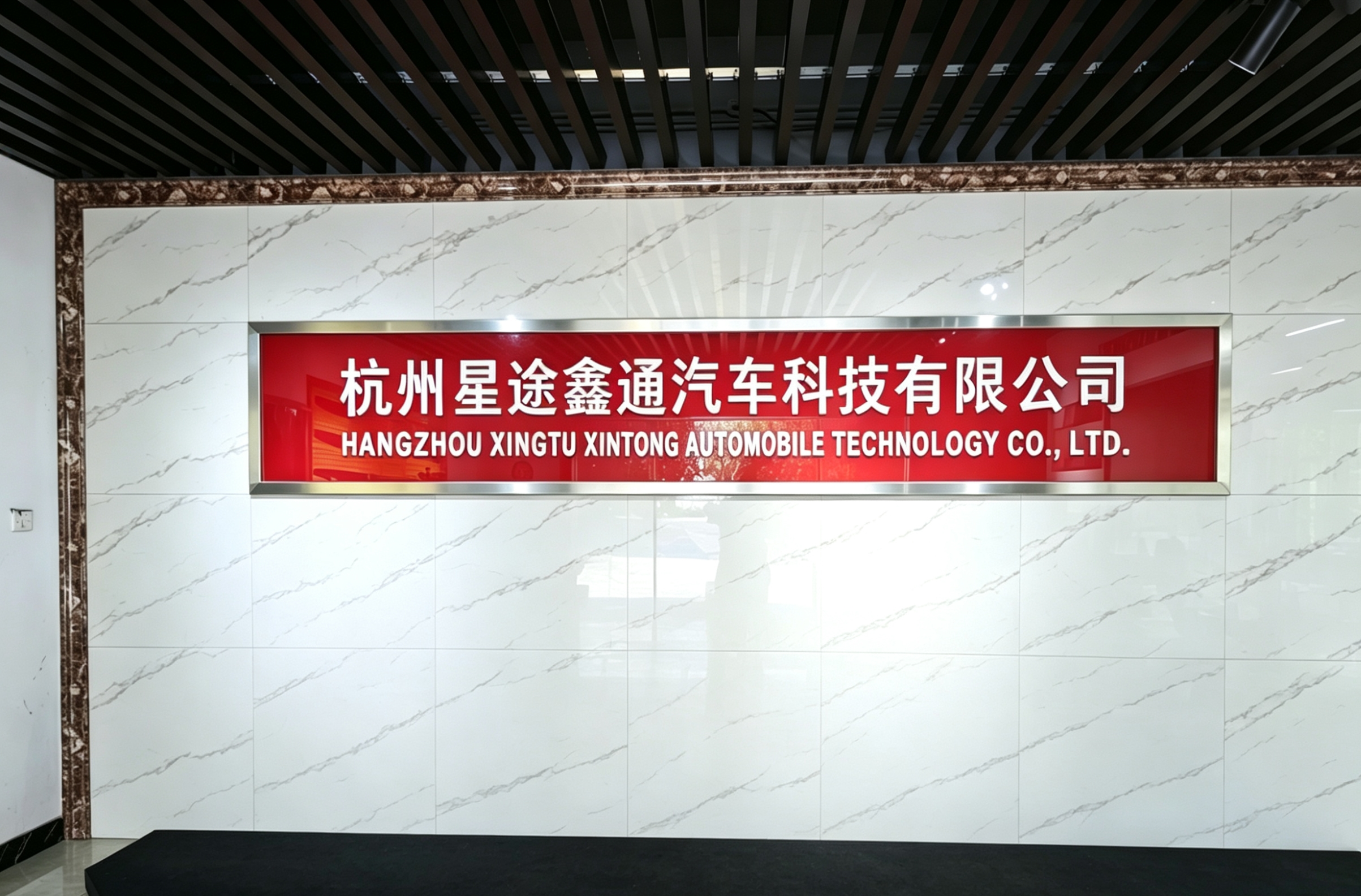
The reference point is the SUMEI film range and automotive accessories manufactured by Hangzhou Xingtuxintong Automotive Technology Co., Ltd. in Qiantang District, Hangzhou, shipping to more than forty countries.
The payment is staged, not paid
A paint protection film order is almost always settled in two parts, with the split falling at a specific production milestone rather than at a calendar date. The standard shape:
| Stage | Typical share | What it unlocks | What the buyer receives |
|---|---|---|---|
| Deposit on order confirmation | 30% | Material booking, slitting schedule, artwork for private label | Proforma invoice with the agreed specification |
| Balance before shipment | 70% | Release of the finished goods to the forwarder | Packing list, photographs, shipping documents |
Two variations matter. For private-label orders with printed cartons the deposit is often higher, because the packaging is made specifically for the buyer and cannot be resold. For a repeat order with an established account, some factories will move the split or accept a small balance against the bill of lading — but that is a credit decision, not a standard term, and it has to be earned rather than assumed.
What the deposit is actually paying for is worth understanding, because it explains why suppliers resist reducing it. A film order requires booking master roll capacity on the coating line, and that capacity is not interchangeable between a 6.5 mil entry film and a 9.5 mil premium film. The deposit is the buyer's commitment that the booked capacity will be used.
Lead time: which clock is running
"15 to 30 days" is the most quoted and least useful number in the conversation, because it does not say what it counts from. Four different clocks run in a film order, and only one of them is production.
| Clock | What it covers | Typical duration | Who controls it |
|---|---|---|---|
| Sampling | Swatch or sample panel, plus courier both ways | 5–10 working days per round | Shared — the buyer's review time is often the longer half |
| Artwork and tooling (private label) | Carton plates, liner printing, label approval | 7–15 working days for a first order | The buyer's approval speed, mostly |
| Production | Coating, lamination, slitting, packing | 15–30 working days for stock series | The factory |
| Transit | Collection to delivery | 3–7 days express, 7–15 days air, 30–45 days sea | Forwarder and destination customs |
Adding these is where most launch dates fail. A first private-label order that needs two sample rounds, new carton plates and sea freight is not a 15–30 day order; it is a nine to twelve week order, and the production window is less than a third of it.
The practical instruction is to ask for lead time as two numbers: production working days from deposit received, and production working days from artwork approved. A supplier who gives one number is either assuming the artwork is already done or has not thought about it.
Shipping: the choice is made at order, not at completion
The most expensive shipping decision is the one made after production finishes. At that point the mode is no longer a choice between costs; it is a choice between a late launch and an air freight bill.
| Mode | Transit | Relative cost | Right for | Wrong for |
|---|---|---|---|---|
| Express courier | 3–7 days | Highest per kg | Samples, urgent spares, a single roll to a customer | Bulk rolls — dimensional weight makes it punitive |
| Air freight | 7–15 days | High | A launch that cannot move, high-value film, restocking a fast-moving SKU | Filling a container-sized order economically |
| Sea freight | 30–45 days | Lowest per unit | Planned stock, full orders, anything with a date that can be planned | A date already too close when the order was placed |
Film has one property that changes the usual calculus: it is light for its volume. A pallet of rolls occupies space in a way its weight does not justify, so air freight on film is priced on volumetric weight and is worse than the per-kilogram comparison suggests. That is the reason a film order is normally planned around sea freight from the start, with air reserved for recovery.
Which is why the mode belongs in the purchase order. If the order states sea freight and the production end date is set against a 35-day transit, a two-week production slip is a two-week delivery slip. If the mode is left open, the same slip becomes an air freight decision made in a hurry.
Documents the shipment needs
Film is a straightforward export, but "straightforward" assumes the paperwork is complete. Missing documents do not delay a shipment by hours; they delay it by the time it takes to obtain a replacement, which is often a week.
- Commercial invoice — with the HS classification, the agreed Incoterm and the named place
- Packing list — roll count, dimensions, gross and net weight per carton or pallet
- Bill of lading or airway bill — depending on mode
- Certificate of origin — where the destination's preferential tariff requires it
- Test reports — QUV ageing, adhesion, and any substance compliance the destination requires
- Carton markings — shipping marks matching the packing list, for private-label goods especially
Two of these are worth preparing before the order rather than at shipment: the HS classification and the substance compliance documentation. Both take time to obtain and both are difficult to change once goods are moving. The classification question is covered in regional standards and certification; the substance compliance question belongs there too.
Incoterms, in one table
The Incoterm decides three things at once: who pays for each stage, where risk transfers, and who is the importer of record. The third is the one buyers overlook.
| Term | Seller pays to | Risk passes | Practical note |
|---|---|---|---|
| FOB (named port) | Origin port, loaded on vessel | On board | Buyer appoints the forwarder and controls freight cost |
| CIF (named port) | Destination port, freight and minimum insurance | On board — at origin | Seller pays freight but risk moves early; the most misunderstood term |
| DDP (named place) | Buyer's door, duty paid | At destination | Simplest for a new buyer, but the buyer usually never sees the customs entry |
For a first order, DDP removes work. For a repeat programme, FOB usually costs less and leaves the buyer holding the documents they need for duty recovery. The trade-off is the same one described in the buying guides for the wider range, and it is worth deciding deliberately rather than by default.
A workable order timeline
Putting the four clocks and the documents together gives a realistic schedule for a first private-label order shipping by sea. This is what the calendar looks like when nothing goes wrong.
| Week | Activity | Who acts |
|---|---|---|
| 1 | Enquiry, specification agreed, sample dispatched | Both |
| 2–3 | Sample received, tested, approved; artwork brief issued | Buyer |
| 4 | Artwork proofed and approved; deposit paid | Buyer, then factory |
| 5 | Carton and liner printing tooled; materials booked | Factory |
| 6–9 | Production: coating, lamination, slitting, packing | Factory |
| 10 | Final inspection, photographs, balance settled | Both |
| 11 | Collected, export cleared, on the water | Forwarder |
| 16–17 | Arrival, import clearance, delivery | Buyer |
Seventeen weeks for a first private-label order that began with a sample request. The same order as a repeat, with artwork on file and stock series film, compresses to eight or nine. The difference is not production speed; it is everything that has to be created the first time.
Three terms to fix in writing
If nothing else, three sentences belong in the proforma invoice.
On payment: the deposit percentage, the milestone that triggers the balance, and the currency and bank charges convention. "70% before shipment" is not complete until it says whether that means before booking, before loading, or against the bill of lading copy.
On time: production working days counted from two separate events — deposit received and artwork approved — with the assumption about material availability stated. If the order depends on a non-stock thickness or a special surface, that assumption is the whole lead time.
On shipping: the Incoterm with its named place, the mode, and who appoints the forwarder. Naming the place matters: "FOB" alone is not an Incoterm, and the difference between FOB Ningbo and FOB Shanghai is a truck journey and a set of charges.
Get those three right and the rest of the order is ordinary logistics. Leave them vague and every later question — why is it late, why is the freight more than quoted, who pays the duty — becomes a negotiation instead of a lookup.
Xingtuxintong quotes FOB, CIF and DDP from Hangzhou, with express, air and sea available depending on the order, and confirms specification, lead time and shipping method per order. To work through a specific configuration — series, roll count, destination and target date — send the details through the contact page. The MOQ and roll size guide covers the order shape, and warranty terms covers what happens after delivery. The full range is in all products, and the FAQ collection answers the questions that come before an order.