
A custom car floor mat is not a sheet of rubber cut to a shape. It is a moulded part that follows the floor pan, clears the pedals, accommodates the seat rails and holds its edge where a foot pushes against it every day. The tool that makes it is the whole product; everything after the tool is repetition.
This article sets out what a floor mat tooling project involves from the factory side: where the geometry comes from, what the mould looks like and costs, how long development takes, who owns the tool, and what a mid-cycle model revision does to all of it.
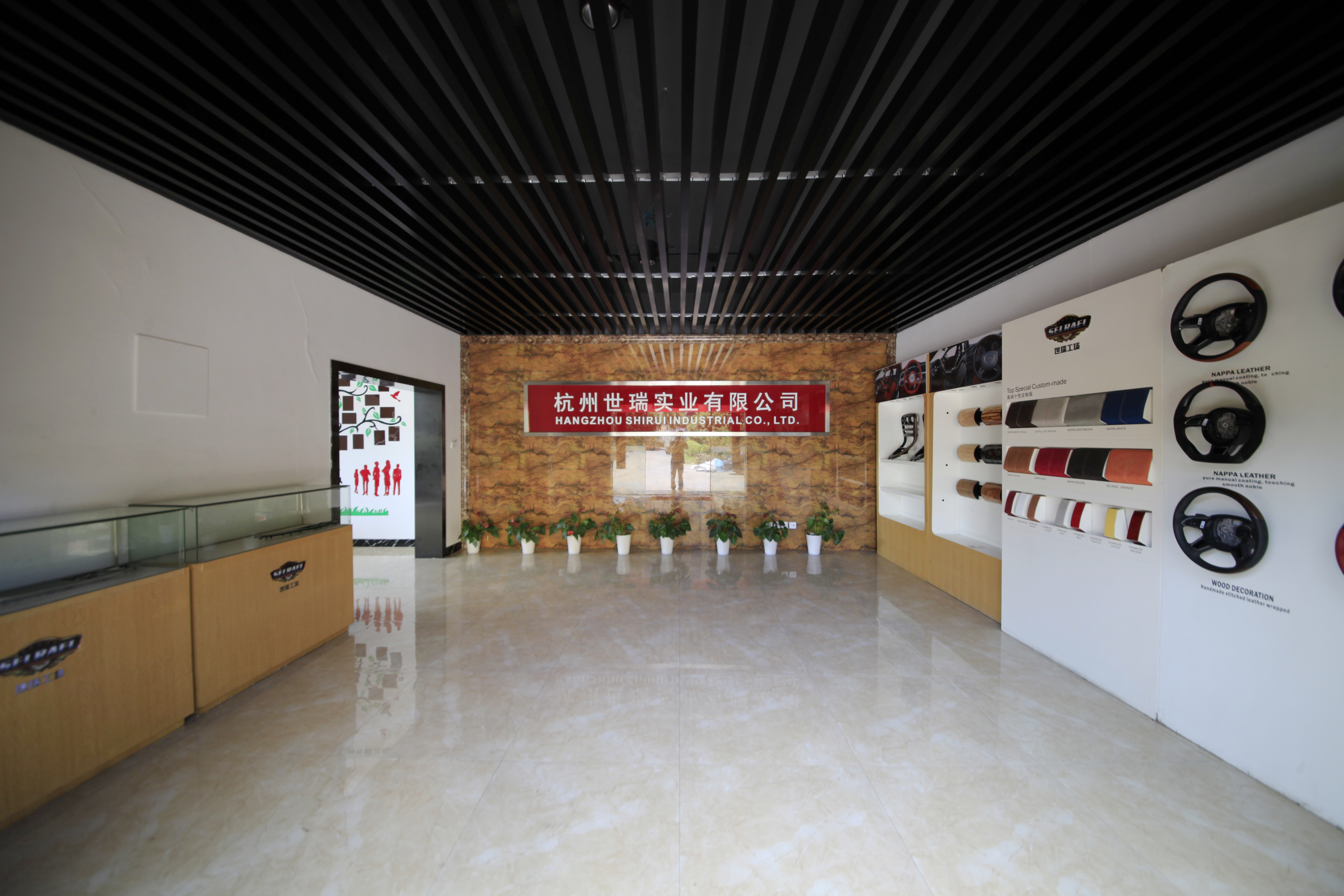
The reference is the in-house capability at Hangzhou Xingtuxintong Automotive Technology Co., Ltd., which runs CNC, mould making, injection moulding, stamping and 3D printing under one roof in Qiantang District, Hangzhou — the reason a floor mat programme can be developed and produced without an outside tool shop.
Where the geometry comes from
Accuracy in a floor mat starts with data, and there are three sources, in descending order of quality.
| Source | How it is obtained | Accuracy | When it is the right choice |
|---|---|---|---|
| Original CAD data | Licensed or supplied floor pan surface model | Highest — the nominal design surface | OEM-adjacent programmes or where the data is legitimately available |
| 3D scan of the vehicle | Structured-light or laser scan of the floor pan, seat rails and pedal box | High — captures the as-built vehicle, not the drawing | The normal route for aftermarket development |
| Physical pattern | Hand-formed or hand-trimmed template from a stripped interior | Moderate — depends entirely on the pattern maker | Low-volume, unusual vehicles, or as a cross-check |
The scan route is standard for a reason: the as-built floor pan differs from the drawing. The same logic applies to fitting a film pattern to a panel — see installation, thickness and environment. Carpet thickness varies, sound deadening is applied unevenly, and the seat rail position has a tolerance. A mat developed from nominal CAD fits the drawing and can foul the carpet in the delivered vehicle.
A practical point that saves a development round: scan with the interior in the state the mat will be installed over — if the buyer's customers keep the original carpet, scan over the carpet; if the mat replaces it, scan the bare floor. The two give different geometry at the same panel, and a mat made for one does not fit the other.
The tool, and what it costs
A floor mat mould is usually a compression or vacuum-formed tool for the main body, with separate tooling for any hard insert, locating clip or heel pad. What drives the cost is not the size but the number of separate tools in the set.
| Tool element | What it does | Cost driver | Typical lead time |
|---|---|---|---|
| Main body mould | Forms the floor pan shape and the perimeter | Surface area, draw depth, finish requirement | The longest single item in the project |
| Perimeter trim tool | Cuts the outline to tolerance | Complexity of the outline | Shorter, runs after the body tool |
| Heel pad / insert tool | Adds the wear panel or a hard insert | Whether it is a separate moulding or a bonded part | Parallel with the body |
| Fixation tooling | Clips, locating posts, retention features | Number of attachment points | Parallel, but needs the body shape first |
| Trial tooling allowance | Modifications after the first articles | Usually one round is enough; two is common | Adds a revision loop |
Two commercial facts are worth stating plainly. The first is that a floor mat tool is a five-figure investment in most currencies, not a few hundred, and it is amortised over the order volume rather than charged per unit. The second is that a single-vehicle tool has a narrow market: the same tool amortised over a model that sells in large numbers in one market is cheap per unit; over a low-volume imported model it is not.
Which leads to the standard question at the start of a project: how many units does the buyer expect over the tool's life, by market — the mirror of the volume question in MOQ and roll sizes, where the minimum is a run rather than a tool. A buyer who cannot answer it is not ready for a dedicated tool and should be looking at a universal-fit or semi-fit mat instead.
Development, step by step
A floor mat programme runs in six stages, and the honest duration depends on how fast the buyer approves each one. The stage gates matter more than the total, and they interact with payment milestones and lead time in the same way a film order does.
| Stage | Output | Duration | Buyer's role |
|---|---|---|---|
| 1. Data capture | Scanned or supplied surface model; photographs of the floor pan in situ | Days | Provide vehicle access or data |
| 2. Surface design | Mat outline, coverage extent, edge treatment, fixation points | Days to a week | Approve coverage — full coverage vs partial changes the tool |
| 3. Tool design and manufacture | Mould machined, finished, trial-fitted | The dominant item | Confirm material spec during this window |
| 4. First articles | Sample mats from the tool, measured and photographed in the vehicle | Days after tool completion | Fit-check and approve or request revision |
| 5. Revision | Tool correction, second sample round | A week or more, wider than buyers expect | Be specific about what fouls and where |
| 6. Production | Bulk moulding, trimming, finishing, packing | Per order volume | Confirm quantity and packaging |
The stage that most often runs long is stage five, and the cause is almost always vague feedback. "It does not fit" costs a week; "the left rear corner lifts 8 mm where it meets the seat rail trim, and the mat creases along the transmission tunnel" costs a day, because the toolmaker knows what to cut.
Material choice, and why it is a tooling decision
The mat material interacts with the tool in ways that are not obvious. A softer compound needs more draw and can release from a simpler tool; a harder or heavily filled compound needs more draft and may need a different surface finish on the tool itself. Deciding the material after the tool is made is a false economy.
The common options and how they behave in development:
| Material | Feel | Tooling implication | Best fit |
|---|---|---|---|
| TPE / TPO | Rubbery, dimensionally stable | Forgiving; good release; tolerates a simple tool | All-weather mats, the mainstream choice |
| PVC | Firmer, more plastic | Needs more draft, careful temperature control | Budget lines, hard-wearing utility mats |
| Eco leather with foam backing | Soft, premium, tailored | Not a moulded-mat tool at all — a cut-and-sew programme | Luxury interiors, where the mat is upholstery |
| Rubber compound | Heavy, very durable | Higher tool wear, longer cycle | Commercial and utility vehicles |
An eco-leather mat is often requested alongside a moulded programme, and it is a different product with a different cost structure: patterns rather than a mould, cutting and stitching rather than moulding. Mixing the two in one brief produces a quote that satisfies neither. The interior materials side of this is covered in seat and steering wheel development.
Who owns the tool
This is the term that decides whether a buyer has a supply relationship or a dependency, and it is negotiable in a way that price rarely is.
Three positions are common. The tool is owned by the factory and used only for the buyer — cheaper, but the buyer's continuity depends on the relationship. The tool is owned by the buyer and held at the factory — the buyer pays more or pays separately, but can move it. The tool is owned by the buyer and physically held by the buyer — rare, and usually only where the buyer has its own production.
What to put in writing, whichever position is chosen: who paid for the tool, who holds title, what happens to the tool if the relationship ends, whether the tool can be used for another customer, and how many years of production the tool is expected to support before refurbishment. A mould has a life measured in cycles; knowing that number tells the buyer when the next capital call is coming.
Model revisions and the mid-cycle problem
A vehicle model receives a facelift, and the floor pan sometimes changes — usually subtly, at the seat rails or the console, and usually without a new model year being obvious in the market. A tool made for the pre-facelift floor pan produces mats that fit most vehicles and foul a few.
The practical defences are three. Keep the scan data and the tool drawing on file with the model year and variant recorded, so a later revision can be compared rather than re-scanned. Ask the factory to record which vehicle variant and market specification the tool was cut for, since the same nameplate can differ by market. And when a revision is suspected, test-fit a sample before running a batch rather than after.
For a buyer running several models, the sensible structure is to treat each tool as an asset with a variant tag rather than as a generic mat for model X. That record also becomes the evidence base for an audit of the factory if the programme changes supplier. The cost of a misfit batch is far above the cost of the record.
When a tool is the wrong answer
Not every floor mat programme justifies a mould. Three situations where it does not:
- Volume is unknown or small. A dedicated tool amortised over a few hundred units per year never repays itself; a semi-fit or universal mat serves the customer acceptably at a fraction of the capital.
- The vehicle is not available for scanning. Developing from photographs or from a competitor's mat produces a tool that fits that reference, not the vehicle.
- The requirement is aesthetic rather than functional. If the customer wants a stitched, branded, colour-matched mat, the product is upholstery and the investment is in patterns and labour, not a mould.
The honest version of the tooling decision is a volume calculation: expected annual units times years of tool life times unit margin, against the tool cost plus revision. If that number is not clearly positive, the correct answer is a different product, not a cheaper tool.
What to send for a tooling quote
A floor mat tooling enquiry that can be quoted answers six things: the vehicle make, model, model year and market specification; whether the mat goes over the original carpet or replaces it; the material class; the coverage extent — full, including the tunnel and rear, or front only; the fixation approach, if the buyer has a preference; and expected annual volume with the number of markets.
With those, a tool cost, a lead time and a per-unit production price can all be quoted, and the buyer can compare two suppliers on the same basis. Without them, the reply will be a range that cannot be compared with anything.
Xingtuxintong develops and moulds custom floor mats in-house — CNC and mould making, injection and stamping, 3D printing for prototype verification — and runs the same capability for ornament parts and interior trim. The company profile is on the about page. Send the vehicle details through the contact page; the finished range is in car floor mats, and the customization and OEM/ODM collection covers the wider development process.