

Paint protection film is unusual among automotive products in that its delivered performance depends heavily on someone other than the manufacturer. The identical roll can last eight years on one vehicle and lift at the edge within a season on another. The film sets the ceiling; installation and environment decide how much of that ceiling is reached.
Why Installation Determines the Result
Three mechanisms explain most premature PPF failures, and all three are installation-related rather than material-related.
| Failure mode | Root cause | Prevention |
|---|---|---|
| Edge lift | Adhesive not fully activated, or edge left with trapped moisture | Wrap edges where possible; post-heat edges to the adhesive activation temperature |
| Silvering / cloudiness | Application solution trapped under the film | Control slip-solution ratio; squeegee systematically from centre outward |
| Tearing on complex curves | Over-stretching beyond the film's elongation limit | Use relief cuts; match film elongation to the curve severity |
Matching Film Thickness to the Panel
Thicker is not automatically better. It resists impact more effectively but demands more skill to install and conforms less readily. A practical mapping:
- 6.5 mil (D1 class) — flat and mildly curved panels, full-front kits on commuter vehicles, cost-sensitive programmes
- 7.5 mil (D3 / F15 class) — the general-purpose choice: bonnet, bumper, mirrors, door cups, where both protection and conformability matter
- 8.5 mil (D5 / F185 class) — high-impact zones on larger vehicles, and markets where customers explicitly compare thickness figures
- 9.5 mil (D7 / X7 class) — premium and high-value vehicles, track and performance applications where impact energy is highest
The D series data illustrates the trade-off clearly: as thickness rises from 6.5 to 9.5 mil, tensile strength rises from 23.9 to 31.4 MPa and elongation from 240% to 280% — but the installer working window narrows at every step.
Hydrophobic Coatings and the Wash Regime
Hydrophobic variants specified at ≥103° contact angle change how the film should be maintained after installation, and getting this wrong shortens coating life.
- First wash timing. Wait for the recommended curing period before the first wash, so the adhesive has fully bonded and edges have sealed.
- No pressure washing at edges. High-pressure water directed at a lifted or partially sealed edge will drive it up. Keep the nozzle perpendicular to the panel and away from film borders.
- Avoid abrasives and strong solvents. The stain-resistance claim — marker wiped off with alcohol leaving no mark — describes a specific solvent interaction, not a general licence for aggressive chemicals.
- Wax and sealant compatibility. Confirm with the supplier which toppers are approved, since some products interfere with the self-healing top coat.
Self-Healing: How It Works and What It Cannot Do
Self-healing describes the elastic reflow of the top coat when warmed. The declared capability is that scratches made with a copper brush on the film surface can be repaired with 60°C hot water.
Two boundaries deserve to be stated plainly to end customers, because unrealistic expectations generate warranty claims:
- It repairs fine surface marring, not cuts that penetrate into or through the base film.
- It depends on the specified heat input. A scratch that would recover under 60°C water may persist in a cold climate without hot water or sunlight exposure.
Environmental Conditions During Application
Film installation is sensitive to the workshop environment, and this is where delivered consistency is won or lost.
| Factor | Why it matters |
|---|---|
| Contamination control | Dust and fibres trapped under the film are the most common visible defect and cannot be removed after bonding |
| Surface preparation | Adhesion depends on a clean, decontaminated, residue-free panel; polish oils must be removed |
| Ambient temperature | Affects both film conformability and adhesive tack during positioning |
| Heat-gun discipline | Staying under the 116°C maximum service temperature avoids distorting or gloss-changing the film |
A Four-Point Acceptance Checklist for Installers
Before a vehicle leaves the bay, these four checks catch the majority of latent problems:
- Edge audit. Walk every border in raking light and confirm full adhesion with no lifting or whitening.
- Silvering check. Inspect flat panels from multiple angles for trapped solution haze.
- Stretch marks. Look at compound curves for over-stretched areas where the film has thinned or clouded.
- Documentation. Record film series, thickness, roll batch and installation date, so any future warranty claim can be traced.
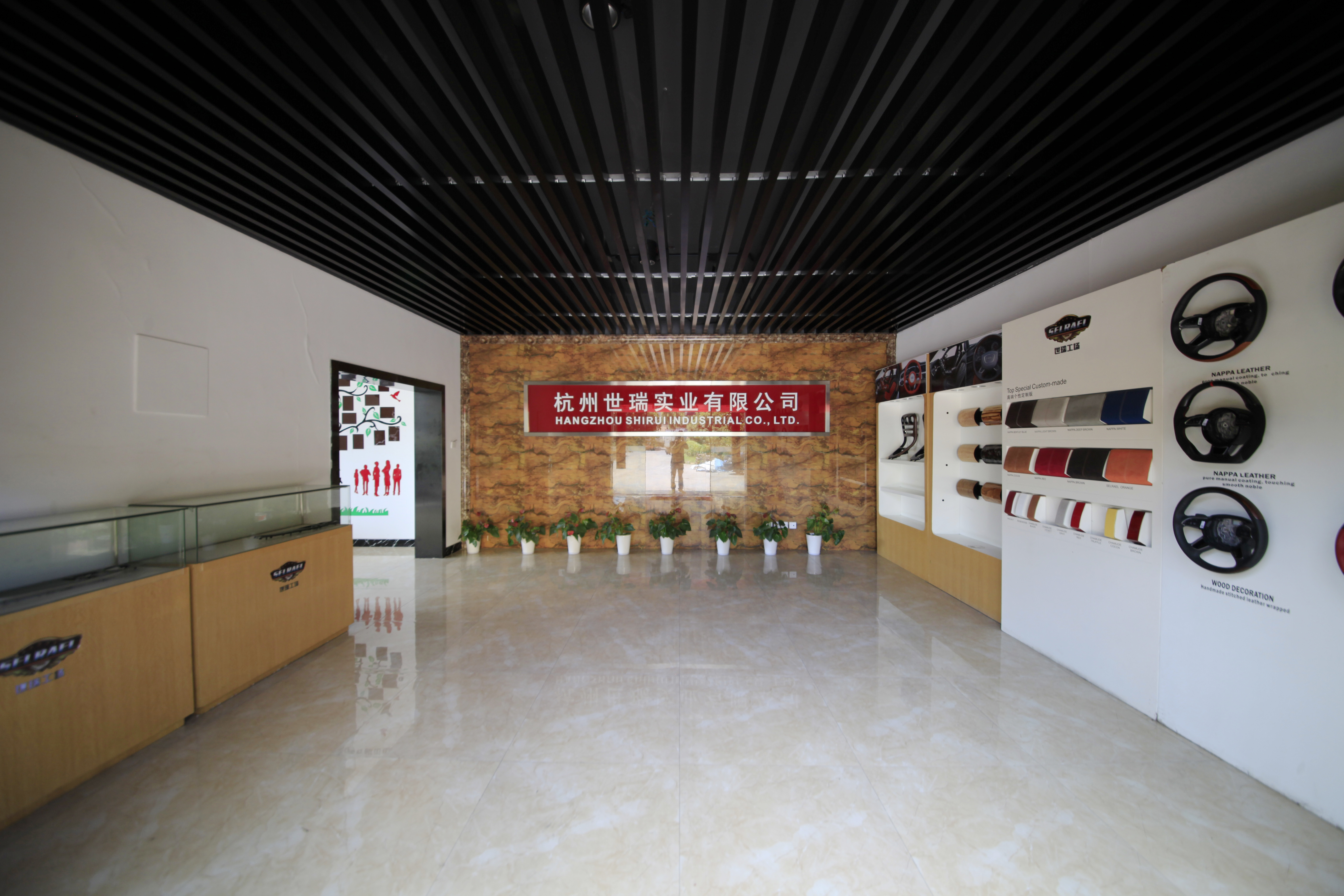
Hangzhou Shirui Industry Co., Ltd. supplies SUMEI aliphatic TPU paint protection film in D, F and X series with declared thickness, tensile and elongation figures, hydrophobic options at ≥103° contact angle and QUV 1000-hour ageing validation. Ask us for the installation guidance that matches the series you buy, and we will provide it with the sample.