

Once a buyer accepts that aliphatic TPU is the right material class, the next question is which series to stock. This is a commercial decision as much as a technical one: the range has to cover the price points your market actually asks for, without carrying so many similar grades that inventory and training become unmanageable.
Start With the Application, Not the Price
Most ranges are structured around four protection tiers, and the tier should be chosen by what the film will face rather than by what the customer wants to pay first.
| Tier | Typical application | Reference spec |
|---|---|---|
| Entry | Daily commuter vehicles, partial front kits, high-volume workshops | 6.5 mil, ~23.9 MPa, 240% elongation |
| Balanced | General retail programmes covering bonnet, bumper, mirrors and door cups | 7.5 mil, ~29.4 MPa, 260% elongation |
| Enhanced | Larger vehicles, high-impact zones, markets comparing thickness figures | 8.5 mil, ~29.7 MPa, 265% elongation |
| Premium | High-value and performance vehicles, track use, longest warranty expectations | 9.5 mil, ~31.4 MPa, 280% elongation |
The Three Product Families and When Each Fits
A supplier range will usually span more than one family, and the families solve different problems.
- D Series — the broadest ladder, running D1, D3, D5 and D7 with hydrophobic variants available at the D3 and D5 levels (contact angle ≥103°). Best when you need a full price ladder from one source with consistent top-coat behaviour.
- F Series — built on BASF aliphatic TPU, with F13, F15, F185 and F20 mapping to 6.5, 7.5, 8.5 and 9.5 mil. UV blocking is declared at 98% for F13/F15 and 98.5% for F185/F20. Best when a customer specifically asks for a named resin producer.
- X Series — includes distinctive finishes beyond standard gloss: a matte variant at 22.3 GU gloss level and a gloss black variant, plus an ice shield variant with infrared rejection of 93% at 1400 nm. Best for differentiation and for markets that respond to appearance options rather than thickness alone.
What the X Series Finishes Actually Offer
The non-gloss options are the most commercially interesting part of a mature range, because they let a reseller differentiate without competing on price.
| Variant | Declared specification | Who buys it |
|---|---|---|
| TPU Matte | 7.5 mil, 29.4 MPa, 260% elongation, gloss 22.3 GU | Owners of factory matte or satin paint, and aftermarket wrap customers |
| TPU Gloss Black | 7.5 mil, 29.4 MPa, 260% elongation, 116°C max. temp. | Piano-black trim, roof and pillar protection, gloss-black styling packages |
| TPU Ice Shield | 7.5 mil, 24.8 MPa, 245% elongation, infrared rejection 93% at 1400 nm | Hot-climate markets where heat rejection is a selling point |
Note that the ice shield variant trades a little tensile strength (24.8 MPa versus 29.4 MPa) for its infrared rejection. That is a normal engineering trade-off, not a defect — but it means the variant should not be sold as an upgrade across every dimension.
How to Trim a Range Without Losing Coverage
A common mistake is stocking every grade, which multiplies SKUs while producing near-duplicates. A workable approach:
- Anchor on two thicknesses. One balanced grade for volume and one premium grade for high-value work covers most demand.
- Add appearance variants only where the market asks. Matte, gloss black and heat-rejection films sell to specific buyer groups, so stock them against identified demand rather than as a full parallel ladder.
- Keep one entry grade for price defence. Without it, the lowest quote in the market wins on paper even when the specification is inferior.
- Standardise the top coat across the range. Consistent self-healing and hydrophobic behaviour across grades reduces training load and warranty disputes.
Beyond Film: The Wider Accessory Range
Many buyers of automotive protection also stock interior accessories, and sourcing them from the same supplier reduces logistics and quality overhead. A representative example is the winged headrest, designed for most mainstream aviation seats including GL8 aviation seats, supplied with side-wing wrapping, a choice of foam kit without cover, optional sleeve tubes, and rod options of 12 mm or 14 mm, finished in moon white, ivory white or a custom blue-and-white scheme, with a two-year warranty.
The relevant point for buyers is that rod diameter and finish must be matched to the vehicle interior before ordering, since these are specification choices rather than cosmetic ones.
Six Questions That Separate Suppliers
- Which resin grade and producer is used in each series, and is it documented?
- What is declared for ageing resistance, over what duration and cycle?
- How is gloss level measured on matte grades, and what is the tolerance?
- What does the warranty cover, for how long, and what are the exclusions?
- What are the roll dimensions, and are custom widths available?
- What is the lead time for sampling versus volume orders?
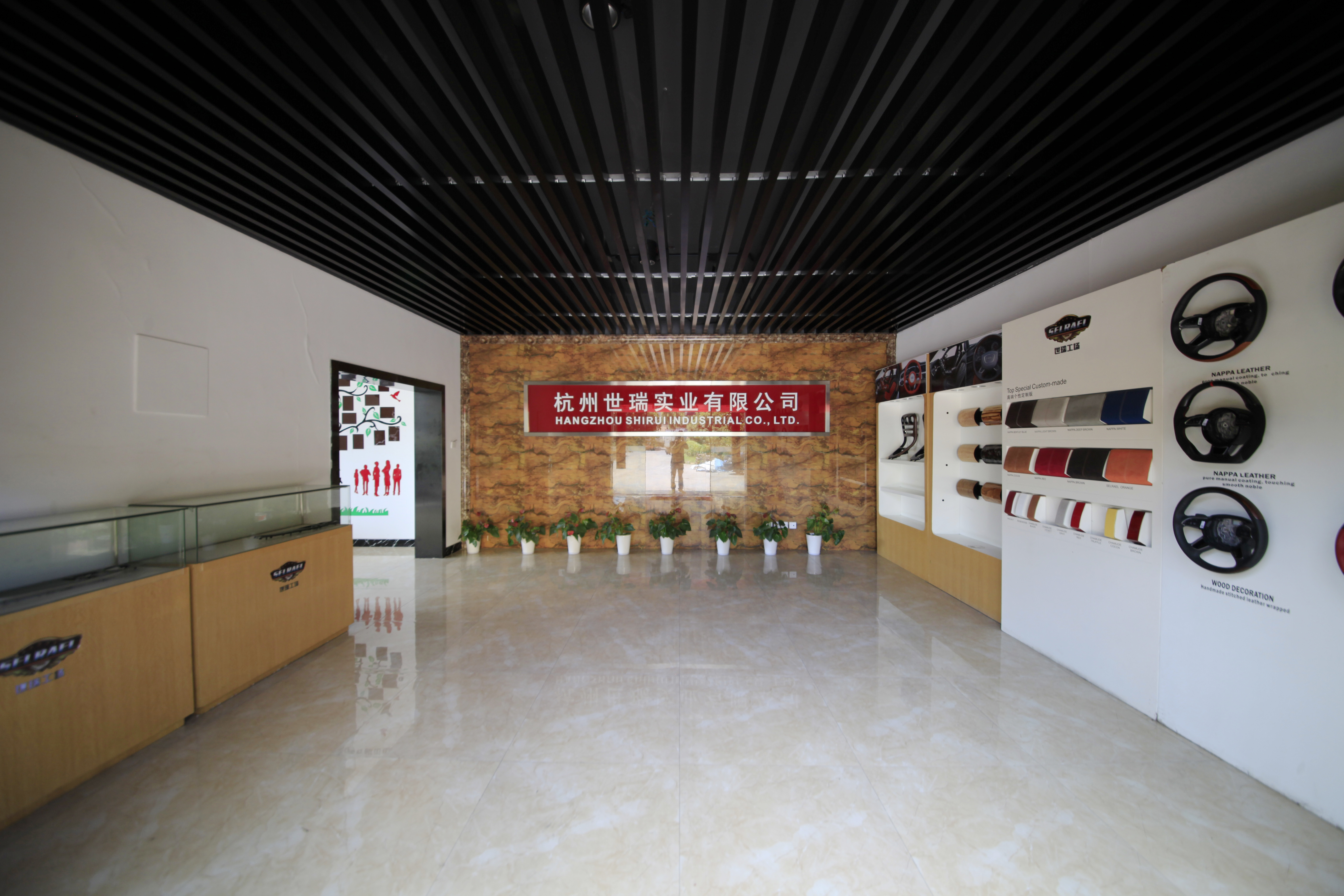
Hangzhou Shirui Industry Co., Ltd., founded in 2018 and based in Hangzhou Qiantang District, is an integrated automotive upgrade solution provider operating the SUMEI brand across PPF, car floor mats and car pillows & headrests, serving over 40 overseas countries with a production partner holding IATF 16949:2016 certification for thermoplastic polyurethane elastomer functional film. Tell us the tiers and finishes your market needs and we will build a matched sample set.