
Export documentation problems are rarely dramatic. A container sits at a port for three weeks because a declaration names the wrong product code; a customer cancels because a safety data sheet is in the wrong language; a batch is refused because a test report covers the wrong scope. None of these is a quality problem, and all of them cost money.
This article sets out the regulation and certification landscape that actually applies to automotive film and interior accessories shipped internationally — what each scheme covers, what it does not, and where the recurring failures are. It is written for exporters and importers rather than as a legal reference, and it is deliberately cautious: requirements change, and the operative document is always the one issued by the authority in the destination market.
Three different things people call certification
The word covers three unrelated concepts, and most confusion in this area comes from treating them as one.
| Type | What it is | Example relevant to film |
|---|---|---|
| Quality system certification | An audit of a manufacturer's management system, issued by a certification body | IATF 16949:2016 covering TPU functional film manufacture |
| Product compliance | A declaration that a product meets a market's legal requirements for substances or performance | REACH compliance; RoHS where applicable |
| Conformity marking | A mark applied to a product attesting conformity, with a technical file behind it | CE marking where the product falls within a directive |
These are independent. A factory can hold IATF 16949 and still ship a product that fails a substance restriction. A product can carry a compliance declaration from a factory with no quality certification at all. When a supplier says "we are certified", the useful follow-up is always: certified to what, by whom, covering which product. The commercial logic of the different tiers in a range, which determines what documentation each one needs, is covered in range tiers and inventory.
Europe: substances rather than performance
For automotive film sold into the EU, the binding requirements are largely about what the product contains rather than how it performs. Three instruments matter.
- REACH — restricts substances of very high concern in articles. The relevant obligation for an importer is to know whether the article contains a substance on the candidate list above the threshold, and to communicate that information up the supply chain.
- RoHS — restricts specific substances in electrical and electronic equipment. Film is not in scope on its own, but accessories with electrical function — illuminated components, powered seat modules — can be.
- ELV considerations — end-of-life vehicle provisions restrict certain substances in materials used in vehicles, which is why a film intended for original equipment use faces questions that an aftermarket film does not.
The practical artefact is a declaration, and the quality of the declaration is what distinguishes a serious supplier. A useful declaration names the product, the regulation, the assessment basis — often a test report from a recognised laboratory — and the date. A PDF with a logo and a sentence is a marketing document.
There is also a language requirement worth planning for: safety data sheets and product information must be provided in the language of the market where the product is placed. Translating a sheet after the container lands is a delay, not a formality. Multi-language manuals and packaging text are handled as part of private label work, covered in private label and packaging customisation.
United States: a patchwork of state rules
The US has no single federal product standard for film of this kind. Requirements that affect a shipment usually come from one of three places.
| Source | What it controls | Why it reaches film |
|---|---|---|
| State VOC regulations | Volatile organic compound content of products sold in the state | Relevant to installation aids and cleaners sold alongside the film, not to the film itself |
| Consumer product labelling | Hazard communication for chemical products | Relevant to any liquid in the box |
| Federal motor vehicle safety standards | Glazing materials, including window film on certain windows | Relevant to window film, particularly on windscreens and front side windows |
Window film deserves separate attention because it is the one product in this category with a genuine federal performance standard attached, and because state-level rules on permitted visible light transmission differ and change. A film that sells freely in one state can be illegal on front side windows in another. The construction differences between paint protection, colour change and window film are covered in colour change and window film construction.
IATF 16949: what it proves and what it does not
The automotive quality standard is the most cited and least read document in the category. It matters because it requires specific mechanisms that a general quality system does not.
| Requirement area | What it means in practice |
|---|---|
| Traceability | A finished roll can be traced to the master roll and the incoming material lot |
| Change control | The customer is notified before a process, material or site change |
| Incoming material control | Pellet and adhesive lots are verified, not accepted on trust |
| Retained samples | Samples are kept so a complaint can be reproduced |
| Scope statement | The certificate names the products and processes covered, and by exclusion, what is not |
What it does not prove: that the specification is right, that the product complies with regional substance rules, or that the site audited is the site producing the order. The scope page and the site address are the two things to read, and both are covered in the factory audit checklist. The standard's real value to an importer is that it makes a documented answer to a problem the default, which is what a resale channel needs.
Customs: the four recurring failures
In practice, most export delays are administrative and repeat identically across shipments. Four account for the majority.
- Wrong commodity classification. Film, film in rolls, and interior accessories sit in different headings, and self-adhesive plastic film in rolls is classified differently from cut shapes. A classification that does not match the goods triggers inspection and re-assessment.
- Value and origin inconsistency. The invoice, the packing list and the declaration must agree. A packing list showing twelve rolls against an invoice for ten is a query even when the explanation is innocent.
- Missing or mismatched technical documents. Declarations that name a different series, a superseded report, or a certificate for a different site.
- Incoterms that do not match the paperwork. An FOB shipment with freight on the seller's invoice, or a CIF declaration without an insurance document, causes as much friction as missing goods.
The three documents worth preparing once and reusing are a classification opinion, a compliance declaration package, and a technical data sheet per series in the destination language. Payment and shipping terms themselves are covered in payment terms, lead time and shipping.
A document checklist by destination
The list below is the practical minimum rather than a legal schedule. Confirm the current requirements with a customs broker or the authority in the destination market before relying on it.
| Document | EU | US | Middle East / SEA / LatAm |
|---|---|---|---|
| Commercial invoice and packing list | Required | Required | Required |
| Certificate of origin | For preferential tariff claims | For preferential tariff claims | Commonly required |
| Substance compliance declaration | Required in practice | Commonly requested | Varies; often requested by the importer |
| Safety data sheet in local language | Required for chemical products | Required for chemical products | Required for chemical products |
| Quality system certificate with scope | Requested by distributors | Requested by distributors | Requested in tenders |
| Technical data sheet per series | Required in practice | Required in practice | Required in practice |
Two rows in that table are worth highlighting. The certificate of origin affects the duty rate, not just the paperwork, so a supplier who can issue one is worth more than the document suggests. And the local-language data sheet is the single most common avoidable delay in small markets, because translation is usually done after the order rather than before.
What to ask a supplier to have ready
Rather than asking whether a supplier is compliant, ask for the specific artefacts. The answers differentiate quickly.
- A quality certificate with the scope page and site address visible, and a certificate number that can be checked against the issuing body's register.
- A substance compliance declaration naming the product series, the regulation and the test basis.
- A technical data sheet per series and thickness, in the destination language where the market requires it.
- A stated commodity classification, with the reasoning behind it.
- A change notification commitment in writing.
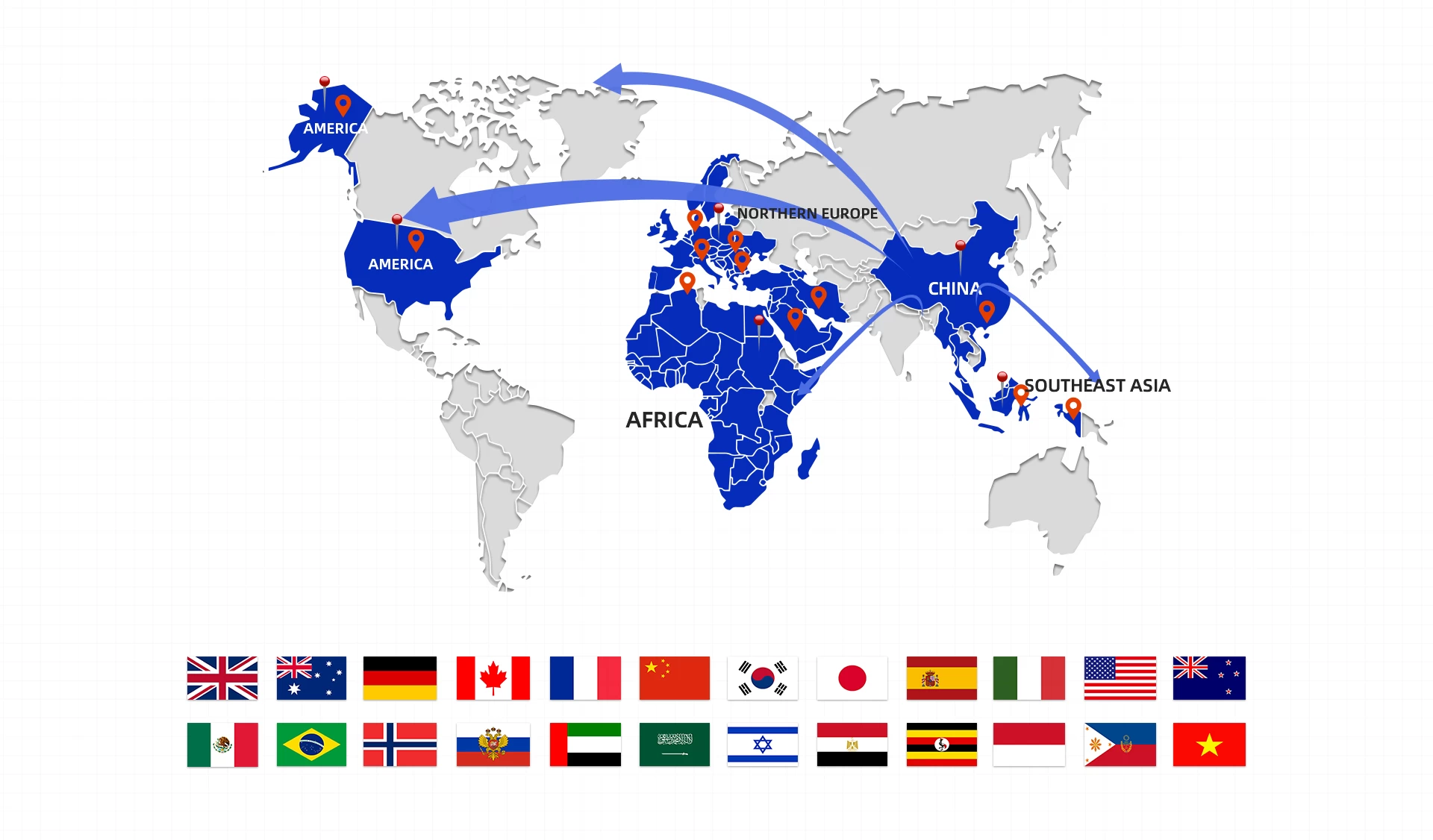
Hangzhou Xingtuxintong Automotive Technology Co., Ltd., established in 2018 and based in Hangzhou, supplies the SUMEI range to more than 40 countries across Europe, the Americas, Southeast Asia, the Middle East and Latin America. Film is produced with a partner holding IATF 16949:2016 certification covering thermoplastic polyurethane elastomer functional film manufacturing, and export documentation, compliance declarations and series data sheets are arranged through the contact page. The range is on paint protection film, and the industry information collection covers supply chain structure and demand trends.